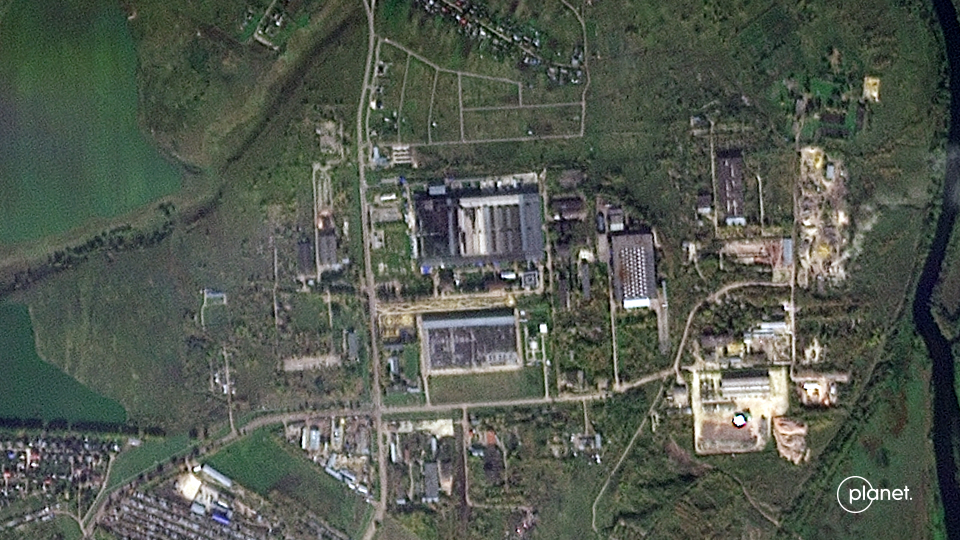


On Wednesday morning, the US Army detonated nearly five tons of degraded lead azide outside of Middletown, Iowa.
Environmental Protection Administration chief Lee Zeldin told CNN shortly after the explosion that preliminary monitoring from the site detected no lead in the air around the site.
But the full extent of the fallout may not be certain for at least a few days. A barrage of government, university, and citizen monitoring and testing projects are underway. Air, soil, and water samples they’ve collected will determine the extent of lead exposure, if any, in Middletown and the surrounding area.
The lead azide has been on the base near Middletown for decades, but recently the Army deemed it unstable and too dangerous to move and remediate. Poor communication between the Army and towns in the path of the fallout led to a public uproar. While the federal government stepped up its mitigation measures—the Army dug a dam around the detonation site, while NASA stepped in with research jets and satellites for monitoring—universities had already been swinging into action due to the chaotic rollout.
Several departments at the University of Iowa kicked into gear to begin to set up air and soil monitoring stations late last week. “Initially we did not know that [the] EPA or Army or anybody else was going to be doing anything,” says Peter Thorne, a professor of environmental health at the university.